

Modified Magnesium Hydroxide - Guangdong Hico New Materials
Product Key Indicators
Key performance parameters of Modified Magnesium Hydroxide
Mg(OH)₂
Chemical Formula
Halogen-free Flame Retardant Filler
4Models
Selected Models
Covering Multiple Scenarios
350°C
Thermal Decomposition
Decomposes to MgO When Heated
≥92
Whiteness
Uniform Color Consistency
Four Core Advantages
Surface activation treatment, comprehensive improvement, perfect compatibility with organic systems
01
🤝
Excellent Interfacial Compatibility
Surface activation treatment provides better interfacial compatibility than untreated powder. Modified magnesium hydroxide disperses easily in organic matrices, reducing interfacial defects caused by polarity differences.
02
💧
Good Dispersibility & Anti-sedimentation
Excellent dispersibility, resistant to agglomeration, with better anti-sedimentation. The organic coating layer on modified particle surfaces effectively prevents particle agglomeration, enabling uniform distribution in organic matrices.
03
🔗
Significantly Enhanced Cross-linking
Modified magnesium hydroxide shows increased cross-linking. Surface active groups can form chemical bonds with polymer matrices, enhancing interfacial bonding strength and improving composite mechanical properties.
04
🧪
More Uniform Cross-section Dispersion
After modification, the cross-section at bonding sites becomes blurred with better dispersion. Microscopic interfacial bonding is tight, with no obvious phase separation, resulting in more stable overall composite performance.
Post-Modification Advantages
Comprehensive performance improvement from surface modification treatment

🧪 Why Surface Modification?

Magnesium hydroxide raw powder has abundant active hydroxyl groups on its surface with strong polarity, making it difficult to disperse uniformly in organic polymer matrices. Issues such as agglomeration, high oil absorption, and poor matrix compatibility are common. Through surface organic coating modification, its processing performance and application effectiveness in organic systems can be significantly improved.

🧠
Significantly Reduced Polarity
Surface organic coating shields active hydroxyl groups, significantly reducing polarity
🌊
Improved Dispersibility
Effectively prevents particle agglomeration, enabling uniform distribution in organic matrices
💧
Reduced Oil Absorption
Reduces formulation viscosity, improves production efficiency
🤝
Excellent Compatibility
Significantly improved compatibility with organic matrices, tighter interfacial bonding
💪
Enhanced Cross-linking
Increased cross-linking after modification, improving composite mechanical properties
Four Modification Types
Providing specialized modification solutions for different application scenarios

🧪 Modified Magnesium Hydroxide Product System

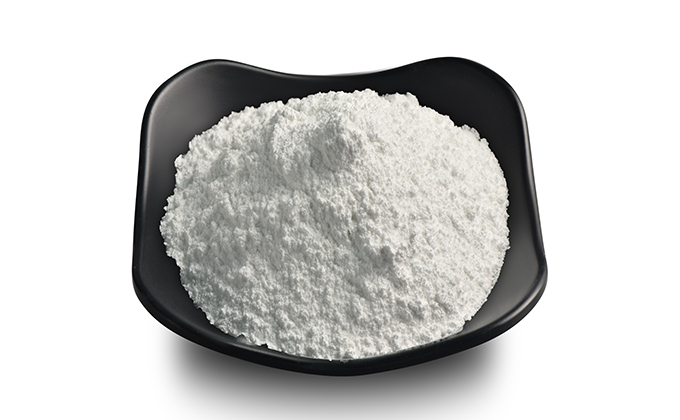
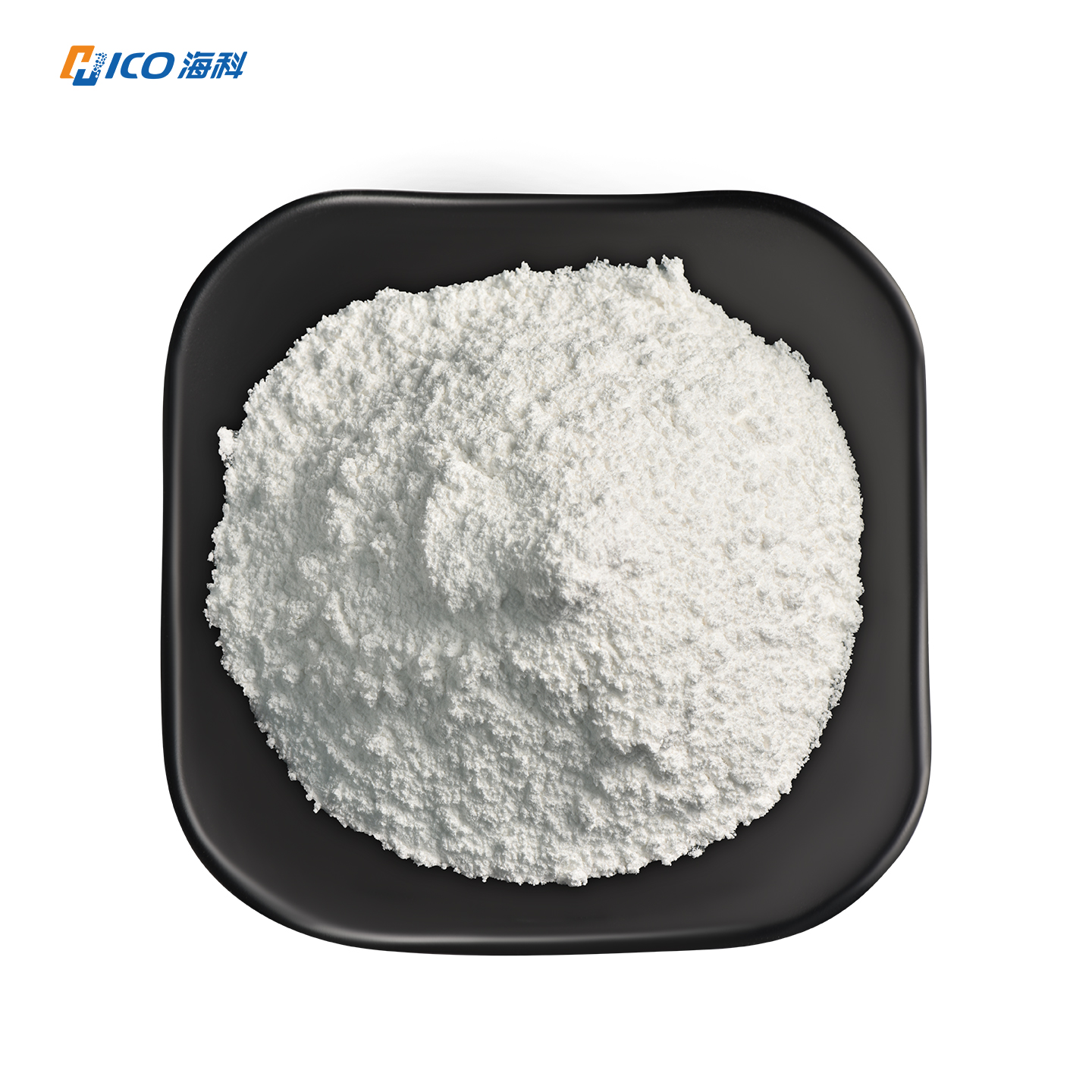
Magnesium hydroxide is an inorganic compound with the chemical formula Mg(OH)₂, a white amorphous powder. Through surface modification treatment, organic functional groups (such as alkyl, amino, vinyl, stearic acid, etc.) are introduced onto the surface of magnesium hydroxide particles, effectively reducing surface polarity, improving compatibility with organic polymer materials, and enhancing dispersibility and interfacial bonding.
Modified Magnesium Hydroxide Microstructure
TYPE 01 Alkyl Modification
Strong Interfacial Bonding · Excellent Dispersion · Good Mechanical Properties
HY-MG-1A
Reduced Polarity
Improved Compatibility
Non-polar Matrix
Silicone Rubber
TYPE 02 Amino Modification
Chemical Bonding · Strong Interfacial Adhesion · Composite Materials
HY-MH-A1
Reactive Activity
Chemical Bonding
Interfacial Bonding
Composites
TYPE 03 Vinyl Modification
Cross-linking Reaction · Improved Mechanics · Rubber & Resin
HY-MH-V1
Double Bond Reaction
Enhanced Cross-linking
Rubber Suitable
Thermosetting Resin
TYPE 04 Stearic Acid Modification
Good Processability · Low Cost · High Filling Capacity
HY-MH-S1
Low Oil Absorption
Good Flowability
High Filling
Cost Advantage
💡
Selection Guide: For non-polar matrices such as silicone rubber and plastics, Alkyl Modification series is preferred; for composite systems requiring strong interfacial bonding, Amino Modification series is recommended; for rubber and thermosetting resin systems, Vinyl Modification series is suitable; for high-filling, cost-sensitive general applications, Stearic Acid Modification series is ideal. Actual product values are subject to factory test reports.
Product Technical Parameters
4 selected models, meeting diverse application needs
📊 Modified Magnesium Hydroxide Technical Parameters
Modification Type Product Model Whiteness D50 (μm) D90 (μm) Oil Absorption (g/100g) Moisture (%) Loss on Ignition (%)
Alkyl Modification HY-MG-1A White 2.50-4.00 5.50-7.50 20-30 ≤0.5 30.22
Amino Modification HY-MH-A1 ≥92 2.5±0.5 ≤10 ≤0.5
Vinyl Modification HY-MH-V1 ≥92 2.5±0.5 ≤10 ≤0.5
Stearic Acid Modification HY-MH-S1 ≥92 2.5±0.5 ≤10 ≤0.5
📋 Note: The above data is for reference only. Actual product values are subject to factory test reports. MgO content: 60-64%; Fe₂O₃ content: ≤0.5%
📊 Product Chemical Indicators
Product Model MgO (%) Fe₂O₃ (%) Moisture (%) Whiteness D50 (μm)
HY-MH-A1 60-64 ≤0.5 ≤0.5 ≥92 2.5±0.5
HY-MH-V1 60-64 ≤0.5 ≤0.5 ≥92 2.5±0.5
HY-MH-S1 60-64 ≤0.5 ≤0.5 ≥92 2.5±0.5
📋 Note: The above data represents the common indicator range for amino/vinyl/stearic acid modified products, subject to factory test reports.
Product Introduction
Magnesium Hydroxide · Halogen-free Flame Retardant Filler · Eco-friendly & Efficient

Magnesium hydroxide is an inorganic compound with the chemical formula Mg(OH)₂, a white amorphous powder or colorless hexagonal crystal. It dissolves in dilute acids and ammonium salt solutions, is nearly insoluble in water, and the dissolved portion is fully ionized, with the aqueous solution being weakly alkaline.

When heated to 350°C, it loses water to form magnesium oxide. The natural mineral brucite of magnesium hydroxide can be used in flame retardant and other fields. As a halogen-free flame retardant filler, magnesium hydroxide offers significant advantages such as being non-toxic, smoke-suppressing, and eco-friendly, making it an ideal alternative to traditional halogen-based flame retardants.

Through surface modification treatment, the dispersibility and compatibility of magnesium hydroxide in organic polymer materials can be further improved, and it is widely used in Flame-retardant Silicone Rubber, Composite Insulators, Wires & Cables, Modified Plastics, and other fields.


Mg(OH)₂ Halogen-free Flame Retardant Smoke-suppressing Surface Modification Low Oil Absorption High Dispersibility
Efficient Flame Retardancy
Absorbs heat and releases water vapor during decomposition, effectively inhibiting flame spread with significant flame retardant efficiency
Smoke Suppression & Toxicity Reduction
Does not produce toxic halogenated hydrogen gas during combustion, low smoke emission, compliant with RoHS/REACH requirements
Good Thermal Stability
Only decomposes above 350°C, stable within processing temperature range, does not affect material molding processes
High Filling Capacity
Excellent dispersibility after modification, can be filled at high proportions without significantly affecting mechanical properties and processability
Surface Modification Customization
Supports multiple modification methods including alkyl/amino/vinyl/stearic acid, customized on demand, adaptable to different matrix systems
Abundant Sources
Natural mineral brucite has abundant reserves, controllable cost, sustainable supply, suitable for large-scale industrial applications
Four Major Application Areas
Covering core industrial fields including flame retardancy, insulation, cables, and plastics
Flame-retardant Silicone Rubber Application
App 01
Flame-retardant Silicone Rubber
As a halogen-free flame retardant filler, modified magnesium hydroxide effectively improves the flame retardant performance of silicone rubber while maintaining excellent mechanical properties and processability, widely used in electronics, electrical appliances, automotive parts, and other fields.
Composite Insulators Application
App 02
Composite Insulators
Adding modified magnesium hydroxide to composite insulator shed materials significantly improves arc resistance and flame retardant rating, ensuring safe and stable operation of high-voltage transmission lines.
Wires & Cables Application
App 03
Wires & Cables
Used for flame retardant modification of wire and cable sheaths and insulation layers, meeting halogen-free low-smoke flame retardant standards, widely used in building wiring, rail transit, new energy, and other high-end fields.
Modified Plastics Application
App 04
Modified Plastics
Used as a flame retardant filler in plastic matrices such as PP, PE, and EVA. Modified magnesium hydroxide disperses uniformly, significantly improving the flame retardant rating and mechanical properties of plastics.
Get product quotes, test reports and consultation
Back to Product Page
Cart
Coupons
Search
HomeHome ProductsProducts CallCall WhatsAppWhatsApp